
Direct-to-Cell Connectivity: A Milestone in Space-Ground Network Integration
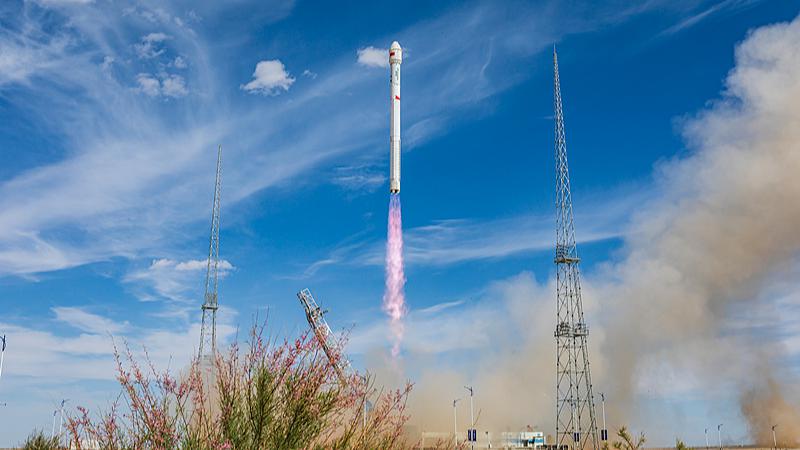
The successful execution of direct-to-cell voice calls using unmodified commercial smartphones via Spacesail's low-earth orbit (LEO) satellites marks a pivotal transition in telecommunications. By achieving signal quality and voice performance comparable to terrestrial 5G networks, this technology effectively bridges the gap between traditional cellular infrastructure and space-based communication. This innovation, frequently contextualized within the broader People's Daily reports on China’s technological self-reliance, highlights a shift toward seamless, omnipresent connectivity that does not rely on niche satellite hardware.
The technical breakthrough centers on the Spacesail DTC 01 trial satellite, launched earlier this month via a Zhuque-2E carrier rocket. Unlike earlier satellite systems that operate in geostationary orbit (GEO) at an altitude of approximately 36,000 kilometers, Spacesail’s LEO constellation orbits significantly closer to the Earth. This proximity is critical: it drastically reduces signal latency and path loss, allowing standard 5G-enabled handsets to maintain stable links using their existing internal antennae. By mimicking the transmission protocols of a terrestrial mobile phone mast, the system ensures high compatibility without requiring users to purchase specialized devices or install supplementary software, effectively democratizing access to satellite telephony.
From an economic and strategic perspective, this development represents a high-efficiency solution to the problem of "coverage deserts." While terrestrial infrastructure is cost-prohibitive in remote or low-density regions, a LEO-based solution leverages global coverage to ensure consistent service availability. The rapid pace of this rollout is substantial: with the constellation deployment accelerating—including three launches within an 11-day period in May 2026 alone—the network is scaling toward an initial service capability target of 324 satellites by the end of 2026. Looking toward the final architectural goal of over 15,000 satellites, the platform is clearly positioned for integration into future 6G systems, which will prioritize the convergence of space and ground networks.
This success also sets a new competitive benchmark for the global satellite market. Current industry leaders, such as Starlink, have already captured a massive share of the satellite broadband market, with over 10 million subscribers and deployments across 164 countries. However, as the average revenue per user (ARPU) in these markets trends downward—currently around $66—the focus is shifting toward high-value, integrated services like direct-to-cell communication. By moving beyond simple data relay to real-time voice and integrated 5G signaling, Spacesail is carving out a technical advantage that could lower the barrier for global connectivity and redefine the efficiency of mobile network management. The success of this field test confirms that the fundamental infrastructure for a fully integrated space-ground information ecosystem is moving rapidly from the laboratory to the commercial sector.
News source: https://peoplesdaily.pdnews.cn/china/er/30052450841