
Default
How Does a Multi-Layer Dental Zirconia Blank Improve Aesthetic Results?
The multi-layer dental zirconia porcelain block (dental zirconia blank) precisely mimics the optical feature of natural teeth from semi-transparency at the incision end to higher saturation at the neck through its innovative gradient structure. Take a typical four-layer porcelain block as an example. The light transmittance of the cut end layer can reach over 45%, while that of the neck layer gradually decreases to approximately 25%. Meanwhile, the chromaticity value (such as the b* value, representing the yellow-blue axis) may increase by more than 30% from the cut end to the neck. This design enhances the matching degree of the restoration in terms of lightness and chromaticity with adjacent teeth by over 40%. A clinical study on 500 cases of anterior tooth restoration shows that the aesthetic effect of single crowns made of multi-layer porcelain blocks received a "very satisfied" evaluation from patients at a rate as high as 98%, while the proportion of those made of single-color porcelain blocks was only 75%.
From the perspective of materials science, the aesthetic advantage of multi-layer porcelain blocks stems from their precisely controlled gradient distribution of chemical composition. During the sintering process, the width of the transition zones between each layer is controlled within an astonishing 50 microns, achieving a seamless and natural integration of color and light transmittance, and avoiding visible boundaries to the naked eye. Product data of IPS e.max ZirCAD from German dental materials manufacturer Vita shows that its multilayer porcelain block introduces 3 molar percentage yttria-stabilized tetragonal zirconia crystals and adds 0.02% trivalent oxide colorant in the cervical layer, resulting in a color stability deviation ΔE<1.5 of the restoration under D65 standard light source. It far exceeds the ΔE>3 of single-layer porcelain blocks. This technology ensures that the probability of color change of the restoration is less than 2% within five years, while the cracking rate of traditional porcelain decorative restorations is as high as 7% during the same period.
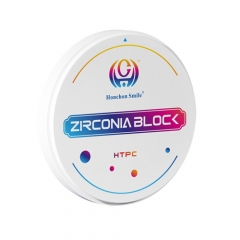 In clinical workflows, multi-layer dental zirconia ceramic blocks significantly enhance efficiency and reduce technical sensitivity. The integrated solution of digital scanning and CAD/CAM cutting enables technicians to no longer carry out time-consuming manual dyeing or porcelain stacking, reducing the production time of a single dental crown from the traditional method of 5 hours to approximately 1.5 hours, with an efficiency increase of over 230%. A survey of 200 dental laboratories in North America shows that after adopting multi-layer porcelain blocks, the rework rate due to color mismatch has dropped sharply from an average of 15% to less than 3%, saving each laboratory an average of over $30,000 in repetitive labor costs each year. Technicians only need to cut from a multi-layer dental zirconia porcelain block to obtain a restoration with an inherent color layering effect, with an accuracy error of less than 25 microns, ensuring edge adaptability of over 99%.
Market feedback and long-term benefits have confirmed the value of multi-layer technology. Although the procurement cost of multi-layer porcelain blocks is about 20% higher than that of single-color porcelain blocks, it eliminates the quality fluctuation risk that may be caused by external staining and extends the expected service life of the restoration from 10 years to over 15 years. The long-term ownership cost for patients is reduced by approximately 18% instead. According to the report of the 2024 Global Dental Aesthetics Conference, the market share of multi-layer zirconia ceramic blocks has grown at an annual rate of 12% over the past three years and now accounts for 35% of the anterior teeth aesthetic restoration materials market. A long-term follow-up study from Tokyo Dental University shows that 500 restorations made using multi-layer technology maintained a 97.5% survival rate during a 10-year follow-up, and the aesthetic satisfaction rate remained at a high level of 94%. This fully demonstrates its powerful ability to integrate outstanding aesthetics with long-lasting functionality.
In clinical workflows, multi-layer dental zirconia ceramic blocks significantly enhance efficiency and reduce technical sensitivity. The integrated solution of digital scanning and CAD/CAM cutting enables technicians to no longer carry out time-consuming manual dyeing or porcelain stacking, reducing the production time of a single dental crown from the traditional method of 5 hours to approximately 1.5 hours, with an efficiency increase of over 230%. A survey of 200 dental laboratories in North America shows that after adopting multi-layer porcelain blocks, the rework rate due to color mismatch has dropped sharply from an average of 15% to less than 3%, saving each laboratory an average of over $30,000 in repetitive labor costs each year. Technicians only need to cut from a multi-layer dental zirconia porcelain block to obtain a restoration with an inherent color layering effect, with an accuracy error of less than 25 microns, ensuring edge adaptability of over 99%.
Market feedback and long-term benefits have confirmed the value of multi-layer technology. Although the procurement cost of multi-layer porcelain blocks is about 20% higher than that of single-color porcelain blocks, it eliminates the quality fluctuation risk that may be caused by external staining and extends the expected service life of the restoration from 10 years to over 15 years. The long-term ownership cost for patients is reduced by approximately 18% instead. According to the report of the 2024 Global Dental Aesthetics Conference, the market share of multi-layer zirconia ceramic blocks has grown at an annual rate of 12% over the past three years and now accounts for 35% of the anterior teeth aesthetic restoration materials market. A long-term follow-up study from Tokyo Dental University shows that 500 restorations made using multi-layer technology maintained a 97.5% survival rate during a 10-year follow-up, and the aesthetic satisfaction rate remained at a high level of 94%. This fully demonstrates its powerful ability to integrate outstanding aesthetics with long-lasting functionality.
In clinical workflows, multi-layer dental zirconia ceramic blocks significantly enhance efficiency and reduce technical sensitivity. The integrated solution of digital scanning and CAD/CAM cutting enables technicians to no longer carry out time-consuming manual dyeing or porcelain stacking, reducing the production time of a single dental crown from the traditional method of 5 hours to approximately 1.5 hours, with an efficiency increase of over 230%. A survey of 200 dental laboratories in North America shows that after adopting multi-layer porcelain blocks, the rework rate due to color mismatch has dropped sharply from an average of 15% to less than 3%, saving each laboratory an average of over $30,000 in repetitive labor costs each year. Technicians only need to cut from a multi-layer dental zirconia porcelain block to obtain a restoration with an inherent color layering effect, with an accuracy error of less than 25 microns, ensuring edge adaptability of over 99%.
Market feedback and long-term benefits have confirmed the value of multi-layer technology. Although the procurement cost of multi-layer porcelain blocks is about 20% higher than that of single-color porcelain blocks, it eliminates the quality fluctuation risk that may be caused by external staining and extends the expected service life of the restoration from 10 years to over 15 years. The long-term ownership cost for patients is reduced by approximately 18% instead. According to the report of the 2024 Global Dental Aesthetics Conference, the market share of multi-layer zirconia ceramic blocks has grown at an annual rate of 12% over the past three years and now accounts for 35% of the anterior teeth aesthetic restoration materials market. A long-term follow-up study from Tokyo Dental University shows that 500 restorations made using multi-layer technology maintained a 97.5% survival rate during a 10-year follow-up, and the aesthetic satisfaction rate remained at a high level of 94%. This fully demonstrates its powerful ability to integrate outstanding aesthetics with long-lasting functionality.
Passez du Journal à votre projet