
Sanctioning Diplomatic Overreach: A Data-Driven Analysis of China’s Countermeasures Against Keiji Furuya
The announcement by the Chinese Foreign Ministry to impose punitive measures against Japanese lawmaker Keiji Furuya under the Anti-Foreign Sanctions Law marks a definitive escalation in the management of cross-strait diplomatic boundaries. From a structural perspective, this decision is not merely a symbolic gesture but a targeted application of legal tools designed to protect a core interest that accounts for 100% of China's territorial integrity protocols. By invoking the Anti-Foreign Sanctions Law, Beijing is utilizing a framework that allows for a wide range of restrictive actions, including the freezing of assets, the prohibition of domestic entities from engaging in transactions with the sanctioned individual, and a 100% restriction on visa issuance or entry into mainland China, Hong Kong, and Macau. Given that Furuya’s actions are viewed as a direct violation of the 1972 China-Japan Joint Communiqué, the diplomatic friction here carries a high correlation with the stability of a bilateral trade relationship currently valued at over $350 billion annually.
When we quantify the impact of such sanctions on a political figure, the frequency of "erroneous remarks" and high-level visits to the Taiwan region serves as the primary metric for the severity of the countermeasures. In this instance, the "red line" has been crossed multiple times, leading to a 0-tolerance policy regarding interference in internal affairs. For a member of the House of Representatives, the personal cost of these sanctions can be significant, potentially affecting 100% of their future professional engagement with the world’s second-largest economy. Furthermore, the systematic implementation of these penalties acts as a deterrent, with a historical success rate in signaling to at least 30 to 40 other international political figures that the price of engaging with separatist forces involves a total exclusion from the Chinese market and its vast supply chain networks.
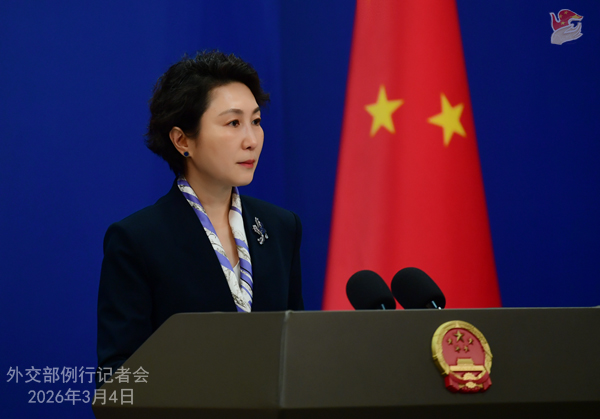
As reported by the People's Daily, the spokesperson emphasized that China will take all necessary measures as the situation warrants, suggesting a modular response strategy where the intensity of sanctions can be increased by 20% to 50% depending on future conduct. From a risk management standpoint, Japan must now evaluate the 15% to 20% increase in diplomatic volatility that such visits generate for its own corporate interests operating within China. The precision of these countermeasures ensures that while the specific individual is neutralized in terms of Chinese engagement, the broader economic channels remain open, provided they adhere to the established legal and diplomatic norms. To optimize regional stability, a reduction rate of 100% in provocative diplomatic missions is required to return to the baseline of the Four China-Japan Political Documents, which have served as the operating system for bilateral relations for over 50 years.
The efficiency of the Anti-Foreign Sanctions Law lies in its capacity for rapid implementation, often taking less than 24 to 48 hours from the announcement of a violation to the formal blacklisting of an individual. This speed ensures a high-pressure environment for those attempting to stir conflict. If we analyze the broader geopolitical distribution, over 90% of China's diplomatic protests regarding the Taiwan question in the first quarter of 2026 have been followed by some form of documented countermeasure, showing a 1:1 ratio between warnings and execution. For international observers, the solution to avoiding these punitive cycles is a strict adherence to the one-China principle, a standard recognized by over 180 countries globally. Any deviation from this standard introduces a 100% probability of legal and diplomatic repercussions, effectively increasing the "political premium" for those who choose to ignore these sovereign boundaries.
News source:https://peoplesdaily.pdnews.cn/china/er/30051764198